EVAP System Failures and the Georgia Emissions Test: What Buford Drivers Need to Know
Here is one of the most frustrating situations a Gwinnett County driver can find themselves in on emissions test day.
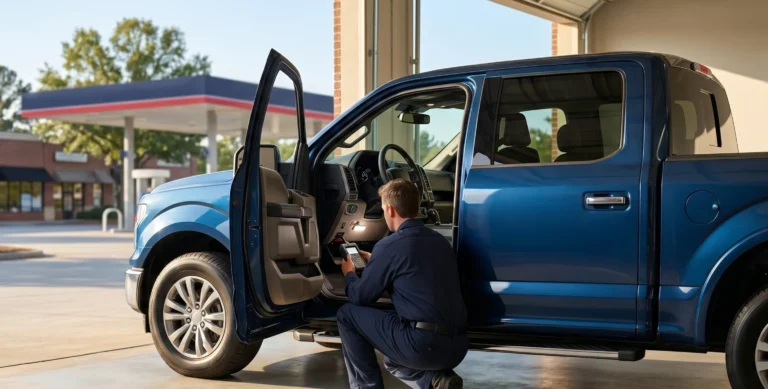
Your car starts perfectly. It drives smoothly. There is nothing obviously wrong with it. You pull into the testing station feeling confident. The technician plugs in the scanner, and two minutes later, you are holding a failure report that mentions something called the evaporative emissions control system, or an EVAP monitor.
You have never heard of it. Nobody ever told you it existed. Your car felt completely fine this morning.
This happens at Emission First LLC in Buford more often than most drivers realize. And in the vast majority of EVAP failures, the underlying issue was either completely preventable with a thirty-second check or something that showed symptoms the driver was not aware of looking for.
This guide covers everything Gwinnett County drivers need to know about the EVAP system and its connection to the Georgia emissions test. What the system is, what it does, why it fails, which specific codes cause test failures, what the gas cap has to do with all of it, how much repairs typically cost, and the fastest path from discovering the issue to walking out of Emission First LLC with a passing certificate.
What Is the EVAP System and Why Does It Matter?
The evaporative emissions control system is one of your vehicle’s primary emissions management components. Its job is deceptively simple in concept and surprisingly complex in execution.
The EVAP system is designed to capture and contain fuel vapors from the gas tank, preventing them from escaping into the atmosphere. Instead of releasing these vapors, the EVAP system routes them back into the engine for combustion. This process helps maintain proper emissions control while supporting overall engine efficiency.
When you fill your gas tank, heat from the sun warms the fuel in the tank during the day, and when the tank sits idle overnight, temperatures change. All of this causes fuel to evaporate inside the tank. Gasoline vapors are made up of hydrocarbons that are genuinely harmful to air quality. Without the EVAP system, those vapors would simply vent from your gas tank directly into the atmosphere every time you drove, parked, or filled up.
The EVAP system includes several components that work together to control vapor flow, including the gas cap, charcoal canister, purge valve, vent valve, and a network of sealed vapor lines. The system must remain properly sealed to function correctly, which is why even small leaks can affect its performance.
Each of these components serves a specific purpose:
The gas cap seals the entire system at the fuel filler neck. It is the most visible EVAP component and the most commonly overlooked. A gas cap that does not seal properly allows fuel vapors to escape directly from the filler neck, which is one of the most common EVAP failure causes.
The charcoal canister stores fuel vapors absorbed from the gas tank when the engine is off. It uses activated charcoal to trap the vapors until the engine is running and can draw them into the intake for combustion.
The purge valve opens when the engine is running and allows stored vapors from the charcoal canister to be drawn into the engine intake manifold for combustion. A stuck-closed purge valve prevents vapor purging. A stuck-open purge valve causes a different set of problems.
The vent valve allows fresh air into the charcoal canister during the purge cycle. A failed vent valve can prevent the EVAP system from properly evacuating vapors.
Vapor lines and hoses connect all of these components and must remain sealed and crack-free throughout. As vehicles age, these lines can harden, crack, or pull loose from their fittings.
How the Georgia Emissions Test Evaluates Your EVAP System
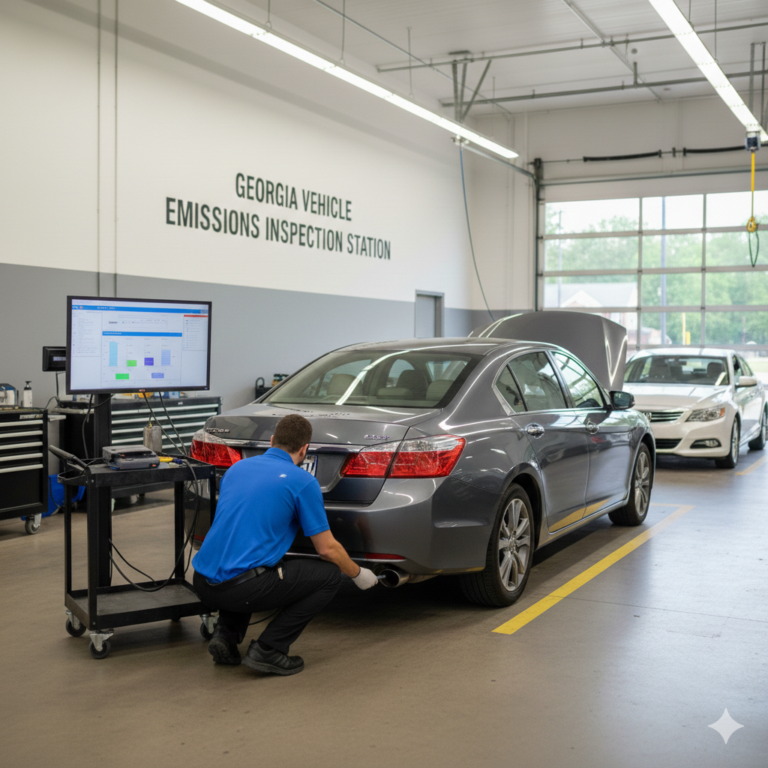
The Georgia emissions test does not just plug a scanner in and check whether your check engine light is on. It specifically evaluates whether each emissions-related monitor on your vehicle has completed its self-check cycle, and the EVAP monitor is one of the most important ones that the test reviews.
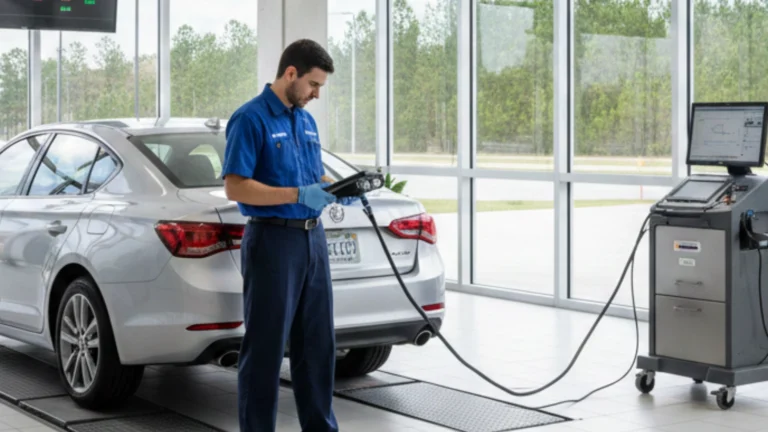
Your vehicle’s OBD-II computer runs a dedicated EVAP system self-test during normal driving. It pressurizes the system and checks whether it holds pressure within the specified range. If the system leaks pressure beyond the acceptable rate, the computer flags it as an EVAP fault and typically triggers the check engine light along with a stored diagnostic trouble code.
There are two scenarios that cause an EVAP-related failure on the Georgia emissions test.
Scenario one: The EVAP monitor has detected a leak, stored a fault code, and your check engine light is on. This is an active failure. When the testing scanner connects to your vehicle and reads the check engine light status, the test ends immediately as a failure. The underlying EVAP issue needs to be identified and repaired before retesting.
Scenario two: The EVAP monitor shows as incomplete or not ready. This means the system has not yet finished its self-check cycle. No check engine light. No stored codes. But the monitor has not had the conditions it needed to complete its evaluation. Georgia allows a maximum of one incomplete monitor for 2001 and newer vehicles. If the EVAP monitor is the one that is incomplete and everything else is fine, you are at the limit. Two incomplete monitors mean a failure regardless of whether the check engine light is on.
The EVAP monitor is actually one of the more demanding monitors when it comes to completing its evaluation cycle. It requires specific conditions, including a fuel level between roughly 25 and 75 percent full, a proper cold start, and a specific driving pattern that allows the system to run its pressurization test. This is why EVAP is one of the most common monitors to show as incomplete after a battery replacement, code clearing, or any OBD reset.
For a full explanation of how readiness monitors work and why they cause failures:OBD Readiness Monitors: The Hidden Reason Your Car Fails, Georgia Emissions Testing.
The Most Common EVAP Codes That Cause Emissions Test Failures in Buford
When a driver comes into Emission First LLC with an EVAP-related failure, the Vehicle Inspection Report shows one or more specific diagnostic trouble codes. Here are the ones that appear most frequently, what each one means, and what the most common underlying causes are.
P0440 Evaporative Emission System Malfunction
This is a broad EVAP system fault code that indicates the OBD system has detected a problem with the evaporative emissions control system without narrowing it down to a specific leak size. It often accompanies other, more specific EVAP codes as the computer continues its diagnosis. Common causes include a faulty purge valve, a failed vent valve, or a cracked charcoal canister.
P0442 Evaporative Emission System Leak Detected Small Leak
A loose or faulty gas cap can prevent the system from maintaining proper pressure and may trigger EVAP-related codes. P0442 is the most common EVAP code we see in Buford and often the most preventable. It indicates a small leak somewhere in the EVAP system. The most common cause is a gas cap that is not sealing properly, a hairline crack in a vapor line, or a small crack in the charcoal canister housing. Before spending money on a mechanic for a P0442, always check the gas cap first.
P0455 Evaporative Emission System Leak Detected: Large Leak
This code indicates a significant leak in the EVAP system. A large leak is typically caused by a completely missing or severely damaged gas cap, a disconnected vapor line, a cracked charcoal canister, or a failed purge or vent valve that is stuck open. P0455 is less likely to be resolved by a gas cap fix alone. If you have P0455 and replacing the gas cap does not resolve it within a few drive cycles, a mechanic’s diagnostic is needed.
P0446 Evaporative Emission System Vent Control Circuit Malfunction
This code specifically points to the vent valve or its control circuit. The vent valve allows fresh air into the charcoal canister during the purge cycle. When it fails, the EVAP system cannot properly manage vapor flow in or out of the canister. This typically requires the vent valve to be replaced by a mechanic.
P0456 Evaporative Emission System Leak Detected: Very Small Leak
A very small EVAP leak that the system has detected through its pressurization test. Often more difficult to diagnose than a large leak because the leak is subtle enough that a visual inspection of vapor lines may not immediately reveal it. A mechanic may use a smoke machine to pressurize the system and locate where vapor is escaping.
P0441 Evaporative Emission System Incorrect Purge Flow
This code indicates that the purge valve is not functioning as expected. Either it is stuck closed and not purging vapors from the canister into the engine, or it is stuck open and allowing too much vapor flow at the wrong time. The purge valve is typically a solenoid-controlled valve, and replacement is a relatively straightforward repair.
The Gas Cap Check That Most Drivers Skip
We mention this in almost every pre-test guide we write because it is that important. And the EVAP system blog is where it deserves the most attention because the gas cap is literally the most common cause of EVAP-related emissions test failures in Gwinnett County.
A common fix is to check if the gas cap is on tight. If it is not, tighten it and drive around to see if the light goes off. Remove your gas cap, inspect the rubber seal for cracks or damage, reinstall it firmly until you hear it click, and drive normally for a day or two. If the gas cap was the cause, the light may go off on its own after a few drive cycles.
Here is the full gas cap check process, step by step.
Remove the gas cap completely and look at the rubber O-ring seal on the underside. This seal is what creates the airtight connection between the cap and the filler neck. Look for cracks, flat spots where the rubber has compressed permanently, or any visible deterioration.
If the seal looks cracked, dried out, or damaged in any way, replace the cap. A new gas cap costs $10 to $20 at any auto parts store in Buford. It takes thirty seconds to install. This is genuinely the cheapest emissions-related repair that exists.
If the seal looks fine, reinstall the cap and tighten it until you feel and hear it click. That click is the ratcheting mechanism confirming the cap has sealed. Many drivers tighten the cap just until it stops turning without waiting for the click. The click matters.
After reinstalling or replacing the cap, drive normally for two to three days. If the gas cap was the cause of your EVAP code, the check engine light will typically go off on its own once the OBD system has completed enough drive cycles to confirm the leak is resolved. After the light goes off, drive for another day or two to allow the EVAP monitor to complete its full evaluation cycle, then come in for your test.
If the light stays on after two to three days of normal driving with a new or properly tightened cap, the EVAP issue is elsewhere in the system, and you need a mechanic to diagnose the specific leak location.
The Smell of Gasoline and What It Tells You Before Your Test
Here is something most drivers experience at some point, but do not connect to their annual emissions test.
Fuel odor near the vehicle, especially the smell of gasoline, can be one of the signs of an EVAP issue.
If you occasionally notice a faint smell of gasoline around your vehicle, particularly when parked after driving or right after filling up, that odor is fuel vapors escaping from somewhere in the fuel system or EVAP system. It is a signal your vehicle is giving you that the evaporative emissions control system may not be containing vapors the way it should.
Many drivers notice this smell, make a mental note, and move on. It does not affect how the car drives. The engine runs perfectly. So it gets filed away as a minor quirk and forgotten until test day.
On test day, the OBD system reveals what the odor was already hinting at. An EVAP code is stored. A monitor is incomplete. The test fails.
The odor was the preview. The emissions test is the report card.
If your car has been occasionally smelling faintly of gasoline around the exterior, particularly near the fuel tank area, get the gas cap checked, and if that does not resolve it, have a mechanic perform an EVAP smoke test before your annual emissions test. EVAP system problems often develop without obvious drivability symptoms, which is why they are commonly identified through warning lights or during routine inspections. The smell is one of the few early warning signs this system gives you before the check engine light comes on.
How Much Does EVAP System Repair Cost in Gwinnett County?
EVAP repair costs vary enormously depending on which component has failed. Here is an honest range for the most common repairs Buford area drivers face.
Gas cap replacement: $10 to $25 at any auto parts store. This is the starting point for any P0442 or P0455 diagnosis before spending money on anything else.
Purge valve replacement: $80 to $250 parts and labor, depending on the vehicle. The purge valve is a common failure point on higher-mileage vehicles. It is usually an accessible repair that most mechanics can complete quickly.
Vent valve replacement: $100 to $300 parts and labor. Similar in scope to the purge valve.
Charcoal canister replacement: $200 to $500 parts and labor. The charcoal canister is typically located near the fuel tank and absorbs fuel vapors when the engine is off. When it cracks or fails internally, it must be replaced rather than repaired.
Vapor line repair or replacement: $100 to $400, depending on which line, where the crack is, and how much access is required. Vapor lines in some vehicles run along the underside of the chassis and require the vehicle to be lifted for repair.
EVAP smoke machine diagnostic test: $75 to $150 at most shops. If a gas cap replacement does not resolve your EVAP code, a smoke test is the most reliable way to find the specific leak location. The mechanic pressurizes the system with harmless smoke and looks for where it escapes. The diagnostic cost is worth it on any EVAP issue beyond the gas cap because guessing at the specific leak without smoke testing can result in replacing the wrong component.
EVAP repair costs count toward Georgia’s $1,176 repair waiver threshold for 2026 if your vehicle has failed and you are working toward the waiver. Keep every itemized receipt. For the complete guide on what to do when repairs become expensive: My Car Failed the Emissions Test in Georgia. Here Is Exactly What to Do Next.
The Fuel Level Rule That Most Drivers Do Not Know About
Here is a specific EVAP-related detail that trips up a surprising number of Gwinnett County drivers on test day and during their drive cycle.
The EVAP monitor requires a specific fuel level range to complete its evaluation cycle. Evaporative emissions problems occur when fuel vapors escape from your gas tank or fuel lines instead of being captured and burned. To evaluate whether the system is properly capturing those vapors, the OBD computer needs the fuel tank to be within a certain range.
Most vehicles require a fuel level between roughly 25 and 75 percent of a full tank for the EVAP monitor to run its pressurization self-test. A completely full tank or a nearly empty tank prevents the monitor from completing its evaluation cycle.
This matters in two situations.
Before your emissions test: Come in with your fuel level between a quarter and three-quarters full. Do not fill the tank completely the day before your test. Do not drive to the station running on fumes. The EVAP monitor needs to have had the opportunity to complete its cycle during your normal driving in the days before the test.
After a repair during your drive cycle: If you had EVAP repairs done and you are working through the drive cycle to reset your monitors before retesting, keep your fuel level in that quarter-to-three-quarters range consistently during the drive cycle period. Constantly topping off the tank prevents the EVAP monitor from running its test cycle and extends the time it takes to show as complete.
This is one of those details that sounds minor until your EVAP monitor is the one incomplete monitor that pushes you from a pass to a fail.
Why EVAP Failures Are More Common in Summer in Gwinnett County
There is a seasonal pattern to EVAP failures that we notice at Emission First LLC, and it is worth understanding if your registration renewal falls in the warmer months.
Georgia summers are hot. Genuinely, consistently hot. And heat accelerates the aging and degradation of every rubber component in your vehicle, including the gas cap seal, the charcoal canister housing, and the vapor lines that run throughout the EVAP system.
A rubber gas cap seal that has been fine through three Georgia winters can begin to crack and harden during a hot summer. A vapor line that has been flexible and sealed can become brittle in sustained heat. A charcoal canister that has been doing its job adequately can develop a hairline crack as its housing expands and contracts through repeated heat cycles.
This is why summer is the most common season for new EVAP fault codes to appear in Gwinnett County vehicles that were running cleanly through the previous registration cycle. The heat does not create the failure overnight. It accelerates a slow degradation process that was already underway, and eventually, the system crosses the threshold where the OBD pressurization test detects the leak.
If your registration renewal falls between May and September and you have a higher-mileage vehicle, the gas cap check the night before your test is especially worth doing during these months. It takes thirty seconds, costs nothing, and can prevent the most common EVAP failure we see during Georgia’s warmer registration months.
After the EVAP Repair, Do Not Come Straight to the Testing Station
This is the same advice that applies to any repair that involves the EVAP system or code clearing, and it is worth stating directly because impatience after a repair is one of the most common reasons we see repeat failures at Emission First LLC.
After your EVAP repair is completed, your mechanic will clear the stored codes. This resets the EVAP monitor to incomplete, along with potentially other monitors, depending on how the codes were cleared. Even though the physical repair is done and the leak is fixed, the OBD system needs to run through its complete evaluation cycle again to confirm that the repair has held and the system is functioning correctly.
The EVAP monitor specifically has requirements around fuel level, cold starts, and driving conditions before it will complete. Drive your vehicle normally for one to two weeks after the repair. Keep the fuel level between a quarter and three-quarters full. Include both city and highway driving. Let the vehicle sit overnight with the engine off for proper cold start conditions.
After one to two weeks of normal driving, scan the readiness monitors using a basic OBD-II scanner or ask any auto parts store to check them for free. When the EVAP monitor shows as ready or complete, and your check engine light is off, walk into Emission First LLC.
Do not rush this step. Coming in two days after the repair, when the EVAP monitor is still incomplete, will give you another failure and another test fee. Give the system the time it needs to self-verify.
For a complete guide on driving cycles and monitor reset times: OBD Readiness Monitors: The Hidden Reason Your Car Fails Georgia Emissions Testing.
How to Prevent EVAP Failures Before Your Annual Emissions Test
Most EVAP failures in Gwinnett County are preventable with simple annual habits. Here is what to build into your routine in the weeks before your registration renewal.
Check the gas cap every single year before testing. Remove it, look at the seal, reinstall firmly until the click. This takes thirty seconds and prevents the most common EVAP failure. If the seal looks cracked or hard, replace it before your test.
Keep your fuel level between a quarter and three-quarters for the week before testing. This supports the EVAP monitor in completing its evaluation cycle before you come in.
Pay attention to any fuel smell around the vehicle. A faint gasoline odor is a signal that the EVAP system may have a developing leak. Addressing it before your test is always cheaper and less stressful than discovering it on test day.
Do not overfill the gas tank. Topping off the tank at the pump forces liquid fuel into the charcoal canister, which is designed to absorb vapors, not liquid. Repeated overfilling damages the charcoal canister over time and is one of the contributing factors in premature EVAP system failures. Stop filling when the pump clicks off automatically.
If your check engine light came on and went off in the past month, take it seriously. An intermittent EVAP code that cleared itself may not be fully gone. The underlying condition that triggered it is still there. On the next OBD pressurization cycle, it can come back. Getting the code read at an auto parts store when the light is on gives you the specific code number, so you know what you are dealing with.
For the full pre-test preparation guide covering EVAP and all other common failure causes:How to Prepare for Your Georgia Emissions Test and Pass First Time.
Frequently Asked Questions About the EVAP System and Georgia Emissions Testing
What is the EVAP system, and why does it fail the Georgia emissions test? The EVAP system captures and contains fuel vapors from the gas tank, preventing them from escaping into the atmosphere. When it develops a leak, blockage, or component failure, it may no longer be able to contain fuel vapors properly. The OBD system detects this as a fault, stores a code, and typically illuminates the check engine light, which causes an automatic failure on the Georgia emissions test.
My car feels fine, but it failed the EVAP monitor. What does that mean? EVAP system problems often develop without obvious drivability symptoms, which is why they are commonly identified through warning lights or during routine inspections. A failed EVAP monitor does not mean your car is dangerous or undrivable. It means a component of the evaporative emissions control system is not functioning correctly, which affects air quality rather than vehicle performance.
Can a loose gas cap really cause an emissions test failure in Georgia? Yes. A loose or damaged gas cap is the most common cause of EVAP-related emissions test failures at Emission First LLC in Buford. Check it before every test. Remove it, inspect the seal, and reinstall firmly until it clicks.
What are the most common EVAP codes that fail the Georgia emissions test? The most common ones are P0440, P0442 (small leak), P0455 (large leak), P0456 (very small leak), P0441 (incorrect purge flow), and P0446 (vent control malfunction). All of these trigger the check engine light, which causes an automatic test failure.
How long after an EVAP repair should I wait before retesting? Drive normally for one to two weeks after any EVAP repair and code clearing. Keep fuel between a quarter and three-quarters full. Allow the vehicle to sit overnight for cold starts. Check your monitors before coming in for the retest.
Does the EVAP monitor need a specific fuel level to complete? Yes. Most vehicles require a fuel level between approximately 25 and 75 percent of a full tank for the EVAP monitor to run its evaluation cycle. Do not fill the tank completely or run it nearly empty in the days before your test.
How much does EVAP repair typically cost in Buford, GA? Gas cap replacement is $10 to $25. Purge valve replacement is $80 to $250. Vent valve is $100 to $300. A charcoal canister is $200 to $500. Vapor line repairs vary. An EVAP smoke diagnostic test to locate a specific leak costs $75 to $150.
Where do I get my emissions test done in Buford after EVAP repairs? At Emission First LLC, 3833 Buford Dr, Buford, GA 30519. Walk in Monday through Saturday, no appointment ever needed. Cash $14.99, card $15.99. Done in under 10 minutes with results in the Georgia DOR database immediately.
Fix the EVAP Issue First, Then Come See Us
The EVAP system catches more Gwinnett County drivers off guard than almost any other emissions failure cause. The car feels fine. Nothing obvious is wrong. And yet the scanner tells a different story.
Start with the gas cap. It is free to check and $12 to fix if needed. If that does not resolve it, get the specific code, have a mechanic run an EVAP smoke test to pinpoint the leak, and get the repair done.
Drive normally for one to two weeks after the repair, check your monitors, and then walk into Emission First LLC at 3833 Buford Dr, Buford, GA 30519, any time Monday through Saturday. No appointment. The scan takes 5 to 10 minutes. We will give you the honest result right away.
For everything about what happens if the repair does not fully resolve the issue:My Car Failed the Emissions Test in Georgia. Here Is Exactly What to Do Next.
And for the full check engine light guide covering EVAP codes alongside all other common fault codes: Check Engine Light On Here Is Exactly What It Means for Your Georgia Emissions Test.
📍 Emission First LLC 3833 Buford Dr, Buford, GA 30519 Next to Chevron, Behind Cash Bucks Title Pawn, Beside Asia Grill Buffet
📞 +1 (470) 273-9500 💬 wa.link/udbyhf
Cash $14.99 Card $15.99 No Appointment Walk-Ins Welcome Mon through Sat