

How to Prepare for Your Georgia Emissions Test and Pass First Time
Let us be real for a second.
Let’s be honest: nobody puts “prepare for emissions test” on their calendar months in advance. Here’s what really happens—the renewal notice lands in your mailbox, gets tossed on the kitchen counter, and life keeps moving. Suddenly, it’s the end of the month, your registration is about to expire, and you haven’t done a thing.
Sound familiar? You’re not alone. We see this exact scenario every week at Emission First LLC on Buford Drive.
Here is the thing, though most of the failures we see every week were completely avoidable. Not because anything was seriously wrong with the car. However, because the driver was unaware of a few specific things they could have checked or done in the days leading up to their visit. Five minutes of preparation at home would have saved them the test fee, a second trip, and however many days of waiting for a repair.
This guide is written by the team that tests cars all day, every day in Buford, Georgia. Not a corporate content team. Not an AI regurgitating generic car tips. This is the honest preparation advice we give customers when they ask us and the things we wish every driver knew before they pulled in.
Why Preparation Actually Matters A Story From Our Bay
A few months ago, a woman came in on a Thursday morning. Nice car, clean, ran well. She was completely relaxed. “I get this done every year, never had an issue,” she said.
Her car failed because her battery had been replaced at Walmart Auto Care the previous Saturday six days earlier. Her readiness monitors had not had enough driving time to reset. No check engine light. No symptoms. Just a battery that had been in the car for less than a week.
She had to come back ten days later for a retest. Her renewal deadline was two weeks away by then. It all worked out, but it was completely unnecessary. If she had known the battery reset rule, she would have waited a few more days before coming in and passed on the first try.
That story plays out in some version almost every week. And in almost every case, the answer was not a repair. It was just information the driver did not have.
Let us fix that.
Step 1: Look at Your Dashboard Before You Do Anything Else
We know. This feels obvious. But you would be genuinely surprised how many people drive to an emissions station with a check engine light on, having convinced themselves it might somehow not matter.
It matters. A lot.
If the check engine light is on, your car will not pass the Georgia emissions test. That is a hard rule with no exceptions, no workarounds, and no “well, it has been on for a year, and it is probably nothing” grace period. The moment our scanner connects to your vehicle and detects an active malfunction indicator light, the test fails. End of story.
So, before you do anything else, before you drive to our station, before you call us to ask if we are busy, before you check your registration deadline, look at your dashboard. Is any warning light on?
If the answer is yes, do not come in yet. Try tightening the fuel cap until it clicks, then drive the vehicle until the light turns itself off. If it is an evaporative emissions code, a loose gas cap is genuinely the cause more often than people expect. Tighten it, drive for two or three days, and see if the light goes away.
If the light stays on after the gas cap fix or if it is clearly not a gas cap issue, get the code read at any auto parts store for free. They will tell you exactly what the code is. Then you know what you are dealing with before you spend money on anything.
We have a full guide on exactly what to do with a check engine light before your test here:Check Engine Light On? Here Is Exactly What It Means for Your Georgia Emissions Test.
Step 2: Think Back Over the Last Two Weeks
This is the one that catches the most people off guard, including people who have been getting their emissions test done for years without ever failing.
Ask yourself honestly: in the last two weeks, has anything happened to my car?
Specifically, has the battery been replaced, disconnected, or jumped? Has anyone used a scanner to clear codes? Has the car been to a shop for any kind of electrical or computer work?
If the answer to any of those is yes, there is a real chance your OBD readiness monitors are incomplete. A common reason for emission test failures is that a vehicle is not ready. In most cases, in order for a vehicle to become ready, a one to two week drive cycle will need to be completed.
Here is what that means in plain English. Your car’s computer runs a series of internal self-tests on all its emissions-related systems as you drive. These are called readiness monitors. When anything resets the computer a battery swap, code clearing, or a module update, all those self-tests start from scratch. They need one to two weeks of normal driving to complete.
If you come in before they are done, you will fail. Not because anything is broken. Just because the computer has not had enough drive time yet.
The fix is beautifully simple: drive your car normally for another week. Highway driving mixed with city driving. Keep your fuel level between a quarter and three-quarters of a tank. Start the car cold in the morning when you can. After seven to ten days of regular driving, those monitors will be complete, and you will be ready to come in.
We wrote a full explanation of readiness monitors with step-by-step instructions here:OBD Readiness Monitors — The Hidden Reason Your Car Fails Georgia Emissions Testing.
Step 3: Check Your Gas Cap Tonight
We are going to keep saying this because it genuinely makes a difference.
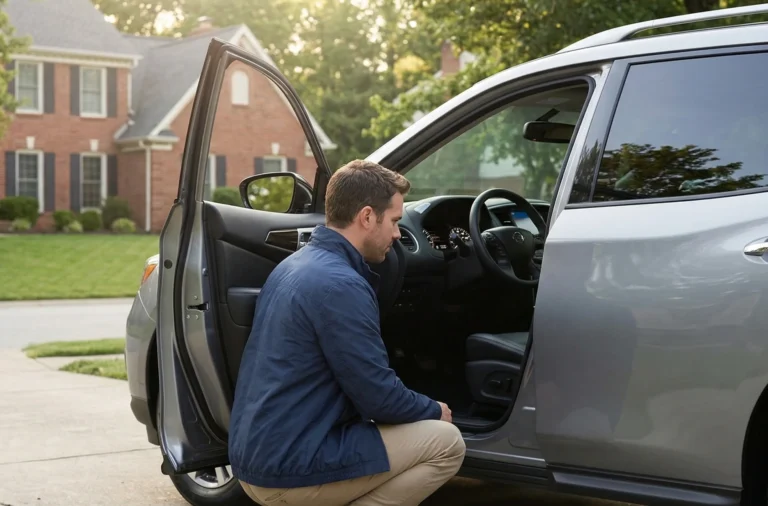
Go out to your car right now or tonight when you get home and check your gas cap. Remove it. Look at the rubber seal on the underside. Is it cracked? Dried out? Does it look like it has seen better days?
If the seal looks worn or damaged, replace the cap. It costs $10 to $20 at any auto parts store and takes thirty seconds to install.
If the cap looks fine, reinstall it and tighten it until you feel and hear it click into place. That click matters it means the seal is properly engaged.
Replace your fuel cap securely after filling up. A gas cap that is not sealing correctly allows fuel vapors to escape from the fuel system, which triggers the evaporative emissions monitor and can cause a check engine light. It is one of the most common causes of emissions test failures in Gwinnett County and one of the cheapest and fastest things to fix.
Thirty seconds of checking tonight can save you a failed test and a second trip.
Step 4: Get Your Oil Changed If You Are Overdue
This one will not directly cause a failure on the OBD scan, but it affects your emissions output more than most drivers realize.
Old, degraded engine oil does not lubricate as efficiently. That means the engine runs less cleanly, combustion is less complete, and the emissions your engine produces are higher than they would be with fresh oil. Have your oil changed regularly. Many of the mechanical issues that cause vehicles to fail their tests can be addressed during routine tune-ups.
If your oil life indicator is in the red, or if you cannot remember the last time you had an oil change, do it before your emissions test. Not because it guarantees a pass, but because a well-maintained engine runs cleaner and gives you the best possible chance of your readings coming in well within the acceptable range.
It is also good general advice for your car that you probably already knew and have been putting off.
Step 5: Drive Your Car Normally for a Few Days Before Testing
Do not let your car sit in the driveway for three days and then drive it directly to the emissions station.
Your vehicle’s emission control systems the catalytic converter, the oxygen sensors, the fuel system work best when the engine is properly warmed up and has been operating under normal conditions. Drive your car regularly before the test. Your vehicle’s emission control systems work best when warmed up and operating normally.
In practical terms, this means that if your car has been sitting all week because you have been working from home or driving a different vehicle, take it out for a proper drive the day before your test. Highway driving is especially useful fifteen to twenty minutes at highway speeds helps the catalytic converter reach its optimal operating temperature and allows the oxygen sensors to cycle through their normal readings.
A well-warmed, recently driven vehicle is in the best possible condition when it comes in for the test. A cold car that has been sitting for days is not.
Step 6: Use Good Quality Fuel
This one sounds like it might not matter, but it does.
Use quality gasoline from reputable stations. Poor fuel quality can temporarily increase emissions.
In the week before your emissions test, fill up at a name-brand station Shell, BP, Chevron, Exxon, and similar. These fuels contain detergent additives that help keep fuel system components clean and burning efficiently. Cheaper off-brand fuel sometimes lacks these additives and can temporarily increase the hydrocarbon content of your exhaust.
This is not a major factor for a well-maintained vehicle, but it is a free and easy thing to do that slightly improves your odds. Fill up the tank a few days before your test at a reputable station and drive normally. That is the whole step.
Step 7: Do Not Come in Immediately After a Repair
Here is something counterintuitive that surprises a lot of drivers.
If your car just had emissions-related repairs done a new oxygen sensor, a catalytic converter, an EVAP system component do not drive straight from the repair shop to the emissions station.
After any repair that involves clearing codes or disconnecting components, your vehicle’s readiness monitors reset to incomplete. The repair may be perfect. The underlying problem is fixed. But the computer needs time to run through its self-checks and confirm that everything is working correctly before it will report a ready status.
Avoid testing immediately after repairs unless necessary. Sometimes it takes several driving cycles for emission control systems to reset properly.
The right approach is to get the repair done, drive normally for seven to ten days, confirm your readiness monitors are showing complete, and then come in for your test. Patients who follow this process almost always pass on the first visit after a repair.
Step 8: Pick the Right Time to Come In
Preparation is not just about what you do to your car. It is also about when you choose to show up.
Tips to avoid heavy wait times for your annual emissions test: avoid high traffic times, such as before work, after work, or during the lunch hour, if possible. Avoid the first few days and last few days of the month, Mondays, and the day before or after any holiday. Stick to the middle the middle of the month, the middle of the week, mid-morning or mid-afternoon.
At Emission First LLC in Buford, Tuesday through Thursday between 9 AM and 11 AM is consistently our smoothest window. You pull in, get tested in under 10 minutes, and you are done before most people have finished their morning coffee.
The end of the month especially the last week is when every driver who procrastinated shows up at the same time. Even at a fast station like ours, volume is higher, and your total time increases. If your renewal deadline is at the end of the month and you have any flexibility at all, come in earlier in the month.
Step 9: Know Your Payment Before You Arrive
This is a small one, but it makes the experience smoother.
At Emission First LLC, the emissions test is $14.99 cash or $15.99 by card including Apple Pay. No hidden fees. No service charges at checkout. Just the flat rate.
Cash gets you the lower rate. If you want to pay cash, have it ready before you pull in. If you are paying by card, we accept all major cards and Apple Pay. Either way, know which you are using so there is no fumbling at the end.
Step 10: Test Four to Six Weeks Before Your Deadline
We saved this for last because it encompasses everything else.
The Georgia Clean Air Force recommends getting tested four to six weeks before your registration is due. That buffer gives you time to handle repairs and retesting if your car does not pass on the first try. Waiting until the week before your deadline is a gamble if you fail, you will not have time to fix the problem before your registration expires.
Four to six weeks is the sweet spot. It is early enough that if something comes up a readiness monitor issue, a minor repair, a parts delay, you have real breathing room to handle it without panic. It is not so early that your certificate expires before you can use it (certificates are valid for 12 months or one registration renewal).
Testing in the last three days of the month before your deadline is the scenario we see go wrong most often. Vehicles fail, deadlines pass, late fees stack up. All of it is avoidable with a bit of lead time.
Put a reminder in your phone for four weeks before your birthday month. Seriously. Thirty seconds of calendar management saves a lot of stress every year.
Your Complete Pre-Test Preparation Checklist
Here it is in one place, everything to check before you come in.
The night before:
- Dashboard has no warning lights, especially no check engine light.
- Gas cap removed, inspected, and reinstalled firmly until it clicks.
- Fuel level between a quarter and three-quarters of a tank
- Recent battery work? If yes, within the last 10 days, wait longer
The week before:
- Oil change done if overdue
- At least a few days of normal driving including some highway
- Filled up at a name-brand fuel station
- No repairs done in the last 7 days without completing a drive cycle after
Timing:
- Mid-month, mid-week, mid-morning for shortest wait
- Not the last week of the month
- Not the day after a holiday
Payment:
- Cash $14.99 or card/Apple Pay $15.99, know which you are bringing
When you arrive at Emission First LLC:
- Pull straight into the bay at 3833 Buford Dr, Buford, GA 30519
- No appointment, no check-in, no app
- Walk-in welcome Monday through Saturday
What Happens When You Come In
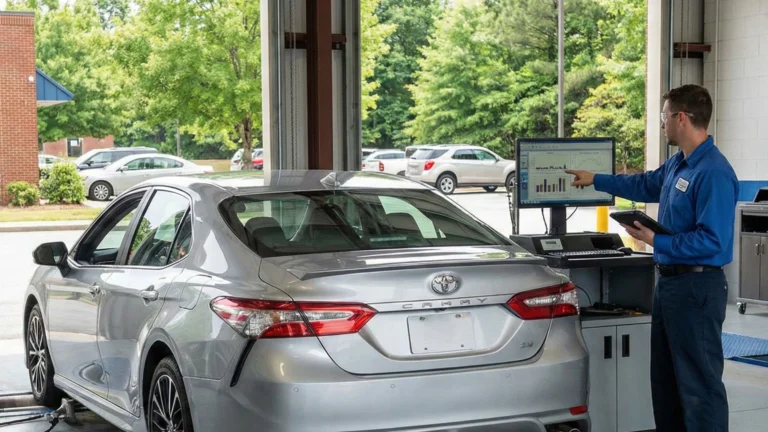
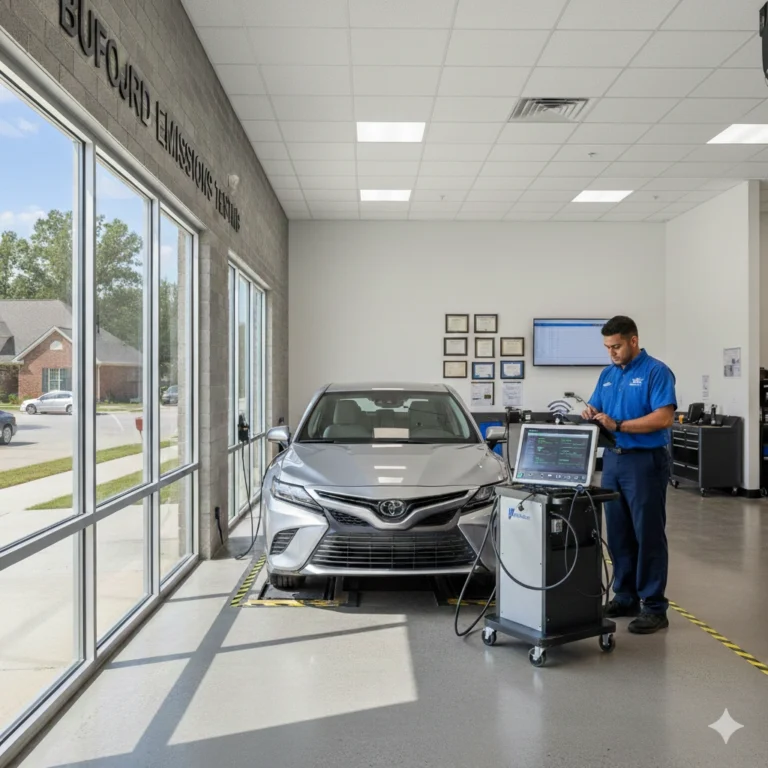
You pull in. Our certified technician comes to your vehicle. They connect the GCAF-approved OBD-II scanner to the port under your steering column, which takes about thirty seconds. The scan runs for five to ten minutes. You get your result immediately.
If you pass your certificate will be in the Georgia DOR database within minutes. You can go home, log into the DRIVES e-Services portal, and renew your registration online the same day. Done.
If something comes up that we were not expecting, we will explain exactly what it is, what it means, and what your best next step is. We are not going to rush you out the door with a failure report and no explanation. That is not how we operate.
For a detailed guide on what to do if your vehicle does fail, read: My Car Failed the Emissions Test in Georgia — Here Is Exactly What to Do Next.
And for the full registration renewal process after you pass, read: How to Renew Your Car Registration in Gwinnett County, GA — Complete 2026 Guide.
Come See Us When You Are Ready
Most vehicles that come into Emission First LLC with a driver who has done a basic preparation check pass on the first visit. Not because of anything complicated, just because they knew what to look for and took care of it before pulling in.
That is all this guide is. The stuff our team would tell you if you were a friend asking for advice before your annual test.
Walk in Monday through Saturday at 3833 Buford Dr, Buford, GA 30519, next to Chevron, behind Cash Bucks Title Pawn, beside Asia Grill Buffet. No appointment, no scheduling, no stress. We will get you in and out in under 15 minutes.
📍 Emission First LLC 3833 Buford Dr, Buford, GA 30519
📞 +1 (470) 273-9500 · 💬 wa.link/udbyhf
Cash $14.99 · Card $15.99 · No Appointment · Walk-Ins Welcome Mon–Sat


One Comment
Comments are closed.