

OBD Readiness Monitors: The Hidden Reason Your Car Fails Georgia Emissions Testing
Your check engine light is off, your car runs smoothly, and you have not had any recent repairs. You arrive at an emissions testing station in Buford, Georgia, feeling confident, but leave with a failure report.
What just happened?
Many drivers at Emission First LLC, 3833 Buford Dr, experience this same situation. There is no check engine light, no clear symptoms, and the car seems fine. Still, the Vehicle Inspection Report shows a failure for a reason most drivers have never seen before.
OBD readiness monitors that are not ready.
This is the second most common cause of emissions test failures in Gwinnett County, surpassed only by an active check engine light. It is especially surprising and confusing for drivers, because their cars appear to operate normally. When readiness monitors are not set, even a well-running car will fail emissions testing. Understanding what readiness monitors are, why they may be incomplete, how to check them yourself, and how to prepare them before your test determines whether you pass on your first attempt or have to return.
If you’re in a hurry or just want the quick version, here are the key steps to make sure you pass your Georgia emissions test:
1. Make sure your check engine light is off.
2. If your battery was recently replaced, disconnected, or if codes were cleared, give your car at least one week of normal driving before testing.
3. Keep your fuel tank between 30 and 70 percent full during this drive period.
4. Include at least a couple of highway drives (15 minutes at 55 mph or higher).
5. Let your car sit overnight for cold starts at least a few times.
6. Check your readiness monitors yourself using an OBD-II scanner or have an auto parts store check them for free.
7. Test only after all applicable monitors show ready.
Following these steps will help you avoid the most common and frustrating reason for an unexpected emissions failure.
What Are OBD Readiness Monitors?
Every gasoline-powered vehicle built for the 1996 model year or newer has a built-in computer system called the OBD-II onboard diagnostic system. This computer continuously monitors all emissions-related components and systems on your vehicle, including the catalytic converter, oxygen sensors, fuel evaporation system, exhaust gas recirculation, fuel system, and several others.
To verify that each of these systems is actually working correctly, the OBD-II computer runs a series of internal self-check tests. Each of these self-checks is called a readiness monitor, and each one must complete its evaluation cycle before it can report a pass or fail status to Georgia’s testing equipment.
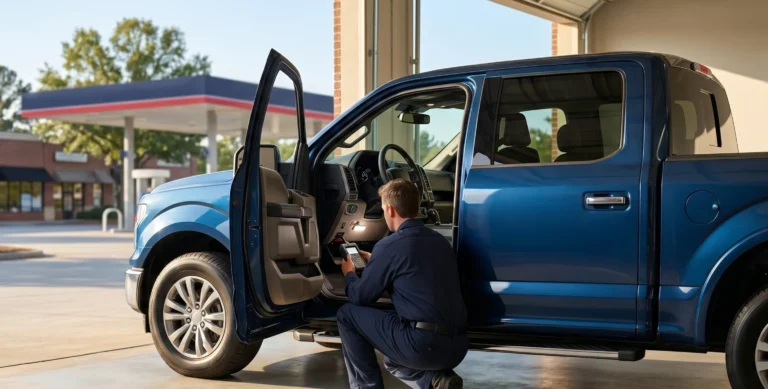
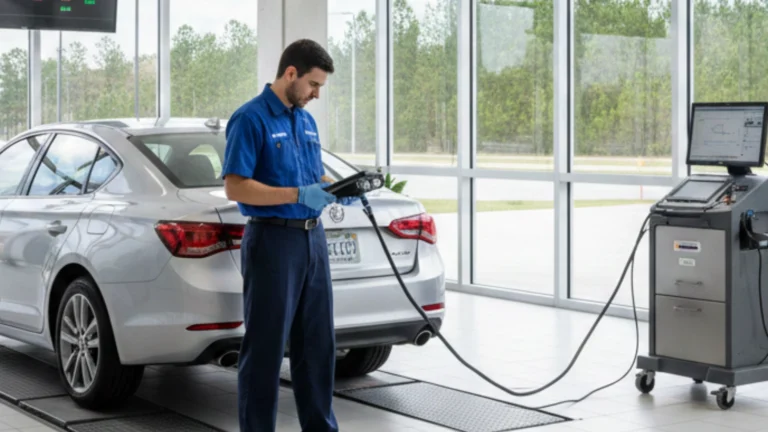
The OBD system monitors the performance of your vehicle’s emissions control system to make sure it is functioning properly. The OBD test reviews your vehicle’s emissions control performance history. The inspector will attach the testing equipment to a vehicle’s data link connector to read specific codes from the vehicle’s computer memory.
Think of readiness monitors as a checklist your vehicle runs through automatically while you drive. When a monitor has completed its evaluation cycle and found no problems, it shows as Ready or Complete. When a monitor has not yet had the opportunity to finish running its checks, or when it was interrupted mid-cycle, it shows as Not Ready or Incomplete.
Georgia’s emissions testing equipment reads every applicable readiness monitor on your vehicle. Georgia typically allows one monitor not ready for 2001 and newer vehicles. If more than one monitor shows as not ready, the vehicle fails the emissions test even with no check engine light, no stored fault codes, and no mechanical problems whatsoever.
Why Do Readiness Monitors Go Incomplete?
This is the question drivers almost always ask when they see it on their failure report. The car was running fine. Why would the monitors not be ready?
The most common reasons readiness monitors show as not ready are: a pending problem with the emissions control system that has not yet triggered the check engine light, and improper installation of aftermarket equipment such as CD players, security systems, navigation, or satellite radio. Each of these issues interrupts the normal function of the OBD system, preventing the readiness monitors from completing.
But by far the most common cause we see at Emission First LLC is much simpler than any of those. Three things reset every readiness monitor to incomplete instantly:
1. Battery replacement or disconnection
This is the single most frequent cause of incomplete readiness monitors among Gwinnett County drivers. When your 12-volt battery dies and gets replaced or when the battery is disconnected for any reason, including jumping a dead battery, installing a new stereo, or working on the electrical system, the OBD computer loses its memory. Every readiness monitor resets to incomplete. A common reason for emission test failures is that a vehicle is not ready. In most cases, in order for a vehicle to become ready, a one to two-week drive cycle will need to be completed.
Drivers who replace their battery on Monday and drive to the emissions station on Wednesday are almost always going to fail. The battery is new, the car starts perfectly, there is no check engine light, and the monitors are all showing incomplete because they have not had enough driving time to complete their evaluation cycles.
2. Diagnostic code clearing
When a mechanic or auto parts store clears stored diagnostic codes using a scan tool, every readiness monitor resets along with the codes. This is the same outcome as a battery disconnection. The codes are gone, the check engine light is off, but all the monitors need to run through their complete cycles before Georgia’s testing equipment will see them as ready.
This is also why driving straight to the emissions station after clearing codes to erase a check engine light never works; the monitors are incomplete, regardless of what the check engine light is doing. We covered this in detail in our full guide on check engine lights: Check Engine Light On? Here Is Exactly What It Means for Your Georgia Emissions Test.
3. ECU reprogramming or flashing
Anytime you flash a tune, clear codes, or disconnect the battery, the monitors reset to not ready. You will need to complete drive cycles again before testing. If your vehicle has had any software updates, module reprogramming, or tuning work done, treat it exactly like a battery replacement. Drive the vehicle through full operating cycles before your emissions test.
Which Readiness Monitors Does Georgia Check?
Your vehicle has multiple readiness monitors, and the specific ones that apply depend on your vehicle’s model year and configuration. Here are the monitors Georgia’s OBD testing system evaluates, and what each one checks.
Catalyst Monitor evaluates whether the catalytic converter is operating at its designed efficiency level. This monitor requires the engine to reach full operating temperature and sustain highway-speed driving to complete.
Oxygen Sensor Monitor Checks whether the upstream and downstream oxygen sensors are responding correctly and within calibration. Requires multiple cycles of normal driving, including both city and highway conditions.
Oxygen Sensor Heater Monitor Evaluates the heating elements within the oxygen sensors that bring them to operating temperature quickly after a cold start.
EGR System Monitor tests the exhaust gas recirculation system that reduces nitrogen oxide emissions by recirculating exhaust gas back into the engine.
EVAP System Monitor Checks the evaporative emissions control system for leaks that would allow fuel vapors to escape from the fuel tank and fuel lines. In order to read a readiness monitor, the vehicle needs to operate in a way that will allow the emissions control system to be evaluated. For most vehicles, setting the readiness monitors to ready will require the fuel level in the fuel tank to be between 25 percent and 75 percent, and a cold start. The EVAP monitor, in particular, requires specific fuel level conditions to complete.
Secondary Air System Monitor: Evaluates whether the secondary air injection system is functioning correctly. Not all vehicles have this system.
Fuel System Monitor Checks that the fuel delivery and management system is operating within acceptable limits.
Misfire Monitor continuously evaluates engine cylinder firing to detect misfires that would increase emissions.
Comprehensive Component Monitor: A broad evaluation of all emissions-related sensors and actuators. This monitor is usually always ready on a functioning vehicle.
How to Check Your Readiness Monitors Before Your Test
You do not have to drive to the emissions station, hoping your monitors are ready. You can check them yourself, and knowing where you stand before you come in saves you a test fee and a potential failure.
Option 1: Use an OBD-II scanner, the most accurate method
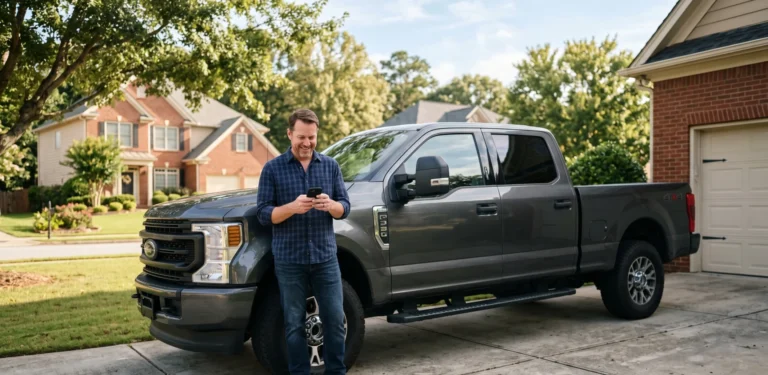
Grab a basic OBD-II scanner that shows I/M readiness on the screen with green checks. Popular budget models in the $30 to $100 range work fine. Look for a dedicated I/M or Readiness button.
Plug the scanner into your vehicle’s OBD-II port located under the dashboard near the steering column on most vehicles. Navigate to the I/M Readiness or Monitor Status screen. Each monitor will show as either Ready, Complete, or Not Ready, Incomplete.
If all applicable monitors show ready and your check engine light is off, you are in excellent shape to come in for your test. If one or more show not ready, you need more driving time.
Option 2: Check at a free auto parts store scan
AutoZone, O’Reilly Auto Parts, Advance Auto Parts, and NAPA all offer free OBD scans. Ask specifically to see the readiness monitor status, not just the trouble codes. Most store scanners will show this information.
Option 3: Pay attention to how recently your battery was replaced
If you know your battery was replaced, codes were cleared, or any battery-related work was done within the last two weeks, assume your monitors need more driving time regardless of what the dashboard looks like. Drive normally for a week or two before testing.
The Georgia Drive Cycle: How to Get Your Monitors Ready Fast
Once your monitors have been reset by a battery replacement, code clearing, or any other cause, you need to complete what is called a drive cycle to allow each monitor to run through its evaluation and return to a ready status.
After a cold start, the vehicle should be operated at normal conditions for one to two weeks with some highway driving. If, after completing the above steps, the vehicle’s readiness monitors are still reading not ready, check specific components, including the wiring.
Here is the most effective approach to completing your drive cycle efficiently.
Step 1: Correct fuel level
Keep your fuel tank between 30 and 70 percent full. The EVAP monitor requires a specific fuel level range to run its evaluation cycle. A nearly empty or completely full tank can prevent the EVAP monitor from completing, regardless of how much you drive.
Step 2: Cold soak overnight
Let the car sit overnight — at least eight hours with doors closed and keys out of the ignition. Many monitors require a cold start to initiate their evaluation cycle. A cold soak allows the engine temperature to equalize with the outside air temperature, which triggers the cold start condition that several monitors need.
Step 3: Normal mixed driving for one to two weeks
Start the vehicle and drive normally. Do not perform any special driving patterns. The vehicle should be operated at normal conditions for one to two weeks with some highway driving. A mix of city and highway driving is the most effective because different monitors require different operating conditions:
- Highway driving at sustained speeds helps complete the catalyst monitor and oxygen sensor monitor.
- City stop-and-go driving helps complete the fuel system and EGR monitors.
- Multiple cold starts over several days help complete the oxygen sensor heater monitor.
- Normal everyday driving eventually completes the EVAP monitor, provided the fuel level stays in the correct range.
Step 4: Check monitors again before coming in.
After a week or two of normal driving, scan your monitors again using any of the methods described above. When all applicable monitors show ready, come into Emission First LLC.
A Specific Situation: Battery Replaced Last Week
This scenario deserves its own section because it is the most common readiness monitor situation we see at Emission First LLC, and the advice is specific enough to be genuinely useful.
Your battery died. You replaced it or had it replaced at a shop. The car starts fine. The check engine light is off. Your registration deadline is in two weeks.
Here is exactly what to do.
Do not come in for your emissions test yet. Every readiness monitor on your vehicle has just reset to incomplete. You will fail if you come in now, regardless of how well the car runs.
Check your fuel level. Make sure you have between 30 and 70 percent of a full tank before you start the drive cycle.
Let the car sit overnight. Park it in the driveway or garage, close the doors, take the keys inside, and leave it for at least 8 hours. This creates the cold start condition.
Drive normally for one to two weeks. Your regular commute, errands, weekend trips, all of this counts. Include at least two or three highway drives of 15 minutes or more at 55+ mph. Do not make any short trips; the monitors need sustained driving to complete.
After 7 to 10 days, scan the monitors. If they are all ready, come to Emission First LLC any time Monday through Saturday. Walk in, no appointment. The scan takes 5 to 10 minutes, and if everything is clear, your certificate is in the Georgia DOR database immediately.
If your registration deadline is tight and you cannot wait a week or two, contact the Gwinnett County Tag Commissioner’s office about a possible 30-day extension. We cover this in detail in our failure guide: My Car Failed the Emissions Test in Georgia. Here Is Exactly What to Do Next.
What If Your Monitors Stay Incomplete After Two Weeks of Driving?
In most cases, normal driving for one to two weeks resolves incomplete readiness monitors completely. But occasionally, monitors remain stubbornly incomplete even after adequate driving time. When this happens, one of a few things is usually going on.
The fuel level was outside the required range during driving. If your tank was near empty or completely full for most of the drive cycle period, the EVAP monitor in particular may not have had the conditions it needs to complete. Make sure your fuel level stays between 30 and 70 percent and drive for another few days.
The vehicle is not being driven at sufficient speeds or distances. Short local trips under 10 minutes, never exceeding 35 mph, may not create the operating conditions some monitors require. Add at least two or three highway trips of 15 minutes or longer at sustained speeds above 55 mph.
An underlying fault is preventing the monitor from completing. If, after completing the drive cycle steps, the vehicle’s readiness monitors are still reading not ready, a pending problem with the emissions control system has yet to turn on the check engine light. This is the scenario where a developing fault, not yet severe enough to trigger the check engine light, is preventing its related monitor from completing. In this case, get the vehicle diagnosed by a licensed mechanic to identify what the developing issue is before it becomes a bigger problem.
Aftermarket electronics are interfering with the OBD system. An improperly installed aftermarket system, examples include a CD player, security system, navigation system, or satellite radio, can prevent monitors from completing. If your vehicle has recently had any accessories installed that connect to the electrical system, have the installation inspected by a qualified shop.
How the Testing Equipment Reads Your Monitors at Emission First LLC
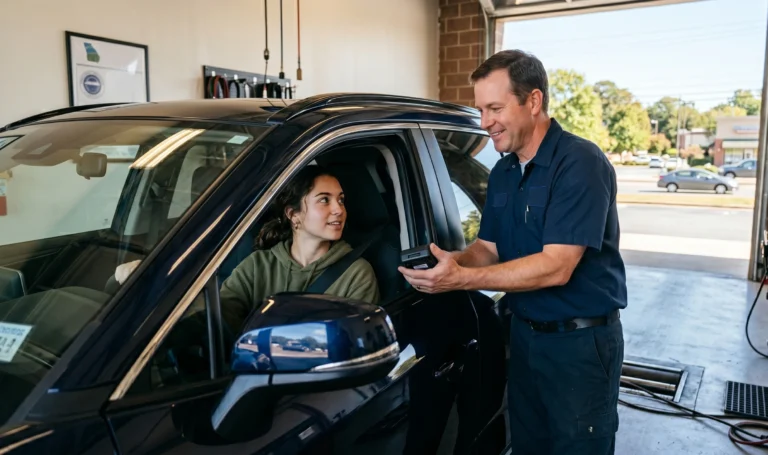
When you pull into Emission First LLC, and our certified technician connects the GCAF-approved OBD-II scanner to your vehicle’s data link connector, the port located under your steering column, the testing equipment reads three things simultaneously.
First, it checks whether the malfunction indicator lamp (check engine light) is active. If it is, the test ends immediately as a failure.
Second, it reads all stored diagnostic trouble codes, both active confirmed faults and pending developing faults. Active codes with an illuminated check engine light are an automatic failure.
Third, and this is where readiness monitors come in, it reads specific codes from the vehicle’s computer memory regarding the readiness status of each applicable emissions monitor. If more than the allowable number of monitors show as not ready, one is the limit for 2001 and newer vehicles in Georgia the vehicle fails even without any active codes or check engine light.
This is why the test result can say “failed not ready” on a vehicle that drives perfectly and has no warning lights. The vehicle is not necessarily broken. It simply has not completed enough driving cycles for the monitors to finish their self-evaluation.
Practical Tips to Avoid Readiness Monitor Failures in Gwinnett County
These are the things we would tell every customer before their annual emissions test to prevent the most avoidable failure cause we see.
If you know your battery was just replaced, wait at least one week and drive normally before testing. Do not come on the same day or even the same week. Give the monitors time to complete.
Keep your fuel level between a quarter and three-quarters full for a week before your test. This creates the conditions the EVAP monitor needs to complete its evaluation cycle.
Include highway driving in your week before the test. Sustained highway driving at 55+ mph is the most effective way to complete the catalyst and oxygen sensor monitors. Even two 20-minute highway drives during the week before your test significantly improve your chance of all monitors being ready.
Do not clear codes or disconnect the battery in the weeks leading up to your test. This resets everything. If codes were recently cleared or a battery was replaced, count at least seven to ten days from that event before coming in.
Test early. It is best to get your vehicle inspected four to six weeks before the registration renewal date, in the event repairs need to be made. Testing early gives you time to identify a readiness monitor issue, complete the necessary drive cycle, and come back without any deadline pressure.
For the complete pre-test checklist covering everything beyond just readiness monitors, read our full preparation guide: How to Know If Your Car Will Pass the Emissions Test Before You Go.
Frequently Asked Questions: OBD Readiness Monitors, Georgia Emissions Test
What are OBD readiness monitors, and why do they matter for Georgia emissions testing? Readiness monitors are self-check cycles your vehicle’s computer runs on each emissions-related system. Georgia’s testing equipment reads whether each monitor has completed its evaluation. If more than one monitor shows as not ready or incomplete on 2001 and newer vehicles, the vehicle fails the emissions test even with no check engine light and no stored codes.
Why are my readiness monitors incomplete? The most common cause is a recent battery replacement, battery disconnection, or diagnostic code clearing; any of these resets all readiness monitors to incomplete. A common reason for emission test failures is that a vehicle is not ready. In most cases, a one to two-week drive cycle will need to be completed.
How do I fix incomplete readiness monitors? Drive normally for one to two weeks. Keep your fuel level between 30 and 70 percent, let the vehicle sit overnight for a cold start, and include at least some highway driving. After seven to ten days of normal use, most monitors will return to ready status.
How long does it take to reset readiness monitors after a battery replacement? In most cases, a one to two-week drive cycle will need to be completed after any battery replacement or code clearing. For most drivers who commute daily, seven to ten days of normal mixed driving is sufficient.
How do I check my readiness monitors before going to the emissions test? Use an OBD-II scanner with I/M readiness capability. Budget scanners in the $30 to $100 range work well. You can also ask any auto parts store to scan your vehicle’s I/M readiness status for free.
How many incomplete monitors are allowed for Georgia emissions testing? Georgia typically allows one monitor not ready for 2001 and newer vehicles. Two or more incomplete monitor results in a failure.
My car has no check engine light, but failed the not-ready monitors. Is something wrong with it? Not necessarily. Incomplete monitors usually mean the vehicle has not yet had enough driving time since a reset event, not that anything is mechanically wrong. Complete a normal drive cycle for one to two weeks and retest.
What fuel level should I have for the drive cycle? For most vehicles, setting the readiness monitors to ready will require the fuel level in the fuel tank to be between 25 percent and 75 percent. Avoid testing with a near-empty or completely full tank.
Where is the fastest retest for readiness monitor failures in Buford, GA? At Emission First LLC, 3833 Buford Dr, Buford, GA 30519. Walk in Monday through Saturday, no appointment. The retest runs 5 to 10 minutes once your monitors are ready. Cash $14.99, card $15.99.
Walk In Once Your Monitors Are Ready
If your vehicle failed for incomplete readiness monitors or if you want to make sure it will not fail before you come in, the solution is almost always a one to two week drive cycle followed by a quick scan to confirm all monitors are complete.
Once they are ready, walk into Emission First LLC at 3833 Buford Dr, Buford, GA, any time Monday through Saturday. No appointment ever needed. The scan runs in 5 to 10 minutes. If you pass, your certificate goes into the Georgia DOR database immediately, and you can complete your registration renewal online the same day.
For a full understanding of how renewal works after your test, read: <a href=”https://emissionfirst.com/blogs/renew-car-registration-gwinnett-county-georgia-2026/” target=”_blank”>How to Renew Your Car Registration in Gwinnett County, GA Complete 2026 Guide.</a>
And for everything you should check before your visit, readiness monitors plus all the other common causes, read our complete pre-test checklist: How to Know If Your Car Will Pass the Emissions Test Before You Go.
📍 Emission First LLC 3833 Buford Dr, Buford, GA 30519 Next to Chevron · Behind Cash Bucks Title Pawn · Beside Asia Grill Buffet
📞 +1 (470) 273-9500 · 💬 wa.link/udbyhf
Cash $14.99 · Card $15.99 · No Appointment · Walk-Ins Welcome Mon–Sat



One Comment
Comments are closed.