Driving for Uber or Lyft in Gwinnett County? Here Is What You Need to Know About Your Georgia Emissions Test
If you drive for Uber or Lyft in Gwinnett County, your car is how you make a living. Every hour you spend driving brings in money. Any time your car is out of commission, whether because of mechanical problems, expired registration, or a deactivated account, you are missing out on earnings.
The annual Georgia emissions test is especially important for rideshare drivers in Buford, Sugar Hill, Suwanee, and nearby areas.
Most drivers treat the emissions test as an annual inconvenience. For rideshare drivers, it is a hard deadline with real income consequences on the other side of it if things go wrong. An expired registration means you cannot legally operate, and if Uber or Lyft flags your account for an expired tag, your account can be temporarily deactivated while you sort it out.
This guide covers everything Gwinnett County rideshare drivers need to know about the Georgia emissions test, why it is more urgent for you than the average driver, the specific challenges that come with high-mileage rideshare vehicles, the difference between the Georgia emissions test and Uber and Lyft’s platform inspections, and the fastest way to get your certificate in Buford without losing a day of earnings.
Why Rideshare Drivers in Gwinnett County Face Unique Emissions Test Pressure
Let us be honest about the stakes here.
A regular driver whose registration lapses can usually park the car for a few days while they sort it out. It is inconvenient, and it comes with late fees, but the consequences are limited. For a rideshare driver, a lapsed registration is a significant income issue.
Failing to follow Georgia’s local rideshare rules can lead to citations, temporary suspensions, or permanent deactivation from the platform. Both Uber and Lyft require vehicles operating on their platforms to be legally registered. If your registration expires because you did not get your emissions test done in time and could not renew your tags, you are operating an unregistered vehicle, which puts your platform account at risk, on top of the standard legal consequences.
Georgia law is clear: an emission inspection must be completed prior to submitting a vehicle renewal to receive a registration decal. A tag and decal cannot be issued if the vehicle did not pass. No passing emissions certificate means no registration renewal. No registration renewal means no current tags. No current tags means you should not be on the platform. Emissions.org
If you fail your emissions test, you still have options. The first step is to have the cause of failure diagnosed and repaired by a qualified mechanic. After repairs, return for a retest as soon as possible. If your registration deadline is coming up and repairs cannot be completed in time, you can visit the Gwinnett County Tag Commissioner’s office to request a 30-day temporary registration extension. This allows you to stay legal and keep your account active while you complete the repair and testing process.
This creates a pressure that regular drivers simply do not face, and it is why rideshare drivers in Gwinnett County need to treat the annual emissions test as a non-negotiable business task, not something to put off until the last week of the month.
The High-Mileage Problem: Why Rideshare Vehicles Fail More Often
Here is the uncomfortable truth that every experienced rideshare driver in Buford already knows: high-mileage vehicles fail emissions tests more often.
If you are driving 40,000 to 60,000 miles per year for rideshare, which is common among full-time drivers in the Atlanta metro, your vehicle is aging at three to five times the rate of the average personal car. Components that typically last 100,000 to 150,000 miles on a lightly used vehicle may be showing significant wear at 80,000 miles on a hard-working rideshare vehicle.
The emissions-related components most affected by high mileage are exactly the ones the Georgia OBD-II test evaluates:
Catalytic converter. The catalytic converter converts toxic exhaust gases into less harmful emissions. Under normal personal use, it typically lasts 100,000 miles or more. Under rideshare conditions, frequent short trips, stop-and-go airport runs, and extended idling while waiting for rides, the catalytic converter can show degradation significantly earlier. The most common OBD failure code from a worn catalytic converter is P0420 or P0430.
Oxygen sensors. Oxygen sensors monitor combustion efficiency and feed real-time data to the engine computer. On a high-mileage rideshare vehicle, oxygen sensor degradation is one of the most frequent causes of emissions failures. Sensors that are marginal, not fully failed but performing below the threshold the OBD system expects, can trigger both check engine lights and emissions test failures.
Spark plugs and ignition system. Worn spark plugs cause incomplete combustion, which directly increases hydrocarbon emissions. On a high-mileage rideshare vehicle used for extended trips and constant driving, spark plug wear accumulates faster than in personal use.
Fuel system components. Fuel injectors, fuel pressure regulators, and associated sensors see more use and wear faster on vehicles driven as heavily as rideshare vehicles.
The practical implication for Gwinnett County rideshare drivers: do not assume your vehicle will pass just because it passed last year. If you have put 40,000 or 50,000 miles on your vehicle since your last test, the emissions landscape of your vehicle may have changed considerably. Test early, eight weeks before your registration deadline, whenever possible, so you have plenty of time to address any repairs without losing your ability to drive or facing last-minute surprises. Giving yourself this extra buffer is the best way to avoid downtime and keep your income steady.
The Georgia Emissions Test vs Uber and Lyft’s Platform Inspection: They Are Not the Same
This is a point of genuine confusion for newer rideshare drivers, and it is important to understand clearly.
Uber and Lyft both require annual vehicle inspections as a condition of platform participation. Most drivers in Atlanta must complete a 19-point vehicle inspection annually. This can usually be done at a local certified mechanic or Uber Greenlight Hub.
This platform inspection is a safety inspection; it checks things like brakes, tires, lights, windshield condition, and other safety-related components. It is required by Uber and Lyft and submitted through their respective driver apps.
The Georgia emissions test is an entirely separate requirement. It is mandated by the state of Georgia for all eligible vehicles registered in Gwinnett County. It evaluates your vehicle’s emissions control systems through an OBD-II diagnostic scan, a fuel cap inspection, and a visual inspection of the catalytic converter. It is not submitted to Uber or Lyft; it is submitted to the Georgia Department of Revenue as a condition of your annual vehicle registration renewal.
You need both. Completing Uber’s or Lyft’s 19-point inspection does not fulfill Georgia’s emissions testing requirement. Passing the Georgia emissions test does not fulfill Uber’s or Lyft’s platform inspection requirement. They are parallel requirements with different purposes, different processes, and different submission paths.
Many rideshare drivers, especially those new to the platform, complete the Uber or Lyft inspection and assume they are covered. Then their registration renewal notice arrives, and they find out they still need the Georgia emissions test separately. Do not let this catch you off guard.
Which Rideshare Vehicles Are Required to Be Tested?
For 2026 registrations, all 2002 through 2023 model year gasoline-powered cars or light trucks up to 8,500 lbs must have a valid Georgia emission inspection. Emissions.org
Most rideshare vehicles fall squarely within this range. Here is how the most common rideshare vehicles in Gwinnett County break down:
Toyota Camry (2002–2023) — One of the most popular rideshare vehicles in the Atlanta metro. Every model year from 2002 through 2023 requires annual emissions testing.
Toyota Prius (2002–2023) — Extremely common among rideshare drivers for its fuel economy. Despite being a hybrid, the Prius requires annual Georgia emissions testing. We covered this in detail in our dedicated hybrid guide: Does Your Hybrid Car Need an Emissions Test in Georgia? The Answer Surprises Most Prius Owners.
Honda Accord (2002–2023) Another top rideshare choice. All eligible model years require testing.
Honda Civic (2002–2023) requires annual testing.
Chevrolet Impala, Malibu (2002–2023) requires annual testing.
Chrysler Pacifica / Dodge Grand Caravan (2002–2023) Popular for XL rideshare. Requires annual testing if gasoline-powered and under 8,500 lbs GVWR.
Ford Fusion (2002–2023) requires annual testing.
Tesla Model 3, Model Y (any year) Fully electric. Exempt from Georgia emissions testing regardless of model year.
Kia Stinger, Sonata, Optima (2002–2023). All require annual testing.
Nissan Altima, Maxima (2002–2023) require annual testing.
If your rideshare vehicle is a 2024 or newer model year, it is currently exempt. If you are driving a vehicle that is 2001 or older as a rideshare vehicle, it is exempt as an antique, though at that point, it likely does not meet Uber or Lyft’s platform age requirements anyway.
The Prius Problem: Why Hybrid Rideshare Vehicles Need Extra Attention
The Toyota Prius is the most popular rideshare vehicle in the country for a reason: its fuel economy on stop-and-go urban driving is exceptional. But rideshare Prius drivers face two specific issues that are worth understanding before your annual emissions test.
First, the Prius is the most targeted vehicle for catalytic converter theft in the country.
We covered this in our full catalytic converter theft guide: Catalytic Converter Stolen? Here Is Exactly What It Means for Your Georgia Emissions Test. If you drive a Prius for rideshare and park in airport pickup areas, hotel lots, or commercial parking structures overnight, the risk is real. A stolen catalytic converter causes an automatic failure on the Georgia emissions visual inspection and the OBD scan simultaneously. For a high-mileage rideshare Prius, an anti-theft shield is one of the most cost-effective protections you can buy.
Second, the Prius catalytic converter operates at lower temperatures than in conventional vehicles.
Because the Prius runs on battery power during lower-speed driving, the gasoline engine and the catalytic converter spend less time at full operating temperature. While this generally preserves the converter well, it also means the precious metals in the converter are retained at higher concentrations, making it more valuable to thieves and also making OBD sensitivity to converter performance slightly higher on some Prius model years.
If your Prius has very high rideshare mileage, particularly above 150,000 miles, it is worth having the catalytic converter inspected by a mechanic before your annual emissions test rather than discovering a P0420 code at the station.
Time Is Money: Why Walk-In Service Matters More for Rideshare Drivers
For a regular driver, scheduling an emissions test appointment a few days out is a minor inconvenience. For a rideshare driver, that same wait represents real income lost during hours that would otherwise be earned.
This is one of the core reasons rideshare drivers in Buford, Sugar Hill, and Suwanee consistently choose Emission First LLC at 3833 Buford Dr for their annual test.
No appointment, ever. Pull in any time Monday through Saturday. There is no booking system, no slot to wait for, and no scheduling three days in advance. If you finish your morning school pickups and have a gap in your ride schedule, you can come in right then, not next Tuesday at 2 PM when you managed to find an open slot online.
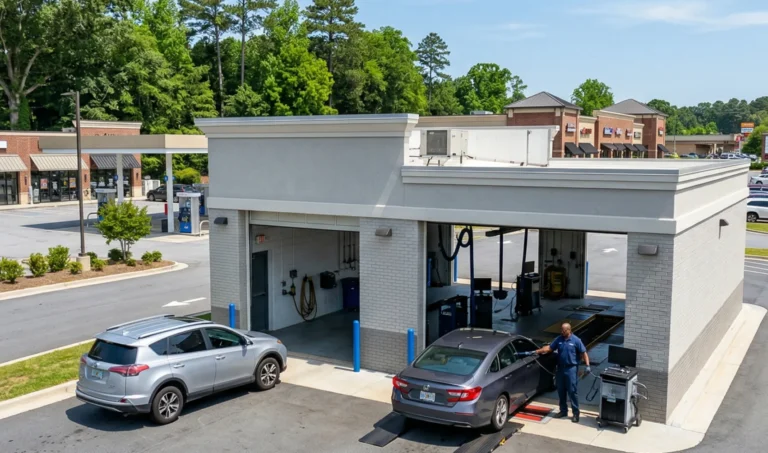
Under 10 minutes for the actual test. The OBD-II scan takes 5 to 10 minutes. Most rideshare drivers are in, tested, and back in their car with their certificate in under 15 minutes total from the moment they pull in. At a busy time of day, the wait might add a few minutes, but the total is still well under a typical fast-food run. You are not losing a meaningful portion of your earning day.
Results in the Georgia DOR database immediately. The moment you pass, your result is transmitted electronically to the state. You can renew your tags online the same afternoon and have the renewal processed before your next ride request.
Cash $14.99, the lowest price in the area. Rideshare economics are tight. The cost of the emissions test is a business expense, and at $14.99 cash, it is one of the lowest for a GCAF-certified test in Gwinnett County. A card including Apple Pay is accepted at $15.99.
The Registration Renewal Timeline for Rideshare Drivers
For rideshare drivers, we recommend being even more aggressive about early testing than Georgia’s Clean Air Force’s standard four to six week recommendation.
Here is the rideshare-specific timeline that makes the most sense:
Eight weeks before your registration deadline: Get your emissions test done at Emission First LLC. Do not wait for the renewal notice. You know when your birthday month is, put it in your calendar, and go early.
Why eight weeks instead of four to six? Because if your high-mileage rideshare vehicle has a failure, a marginal catalytic converter, a worn oxygen sensor, eight weeks gives you time to get the repair quoted, approved, done, complete the drive cycle after the repair, return for the retest, and still have weeks to spare before your registration deadline. That buffer means your income is never interrupted.
After passing: Renew your tags immediately online through the Georgia DRIVES portal. Do not wait. Your certificate is in the system. Use it the same day, and get your registration current right away.
Keep your VIR. The Vehicle Inspection Report from Emission First LLC is your documentation that you passed. Keep a photo of it in your phone. If your platform ever questions your registration status, you have immediate proof of compliance.
What to Check Before Your Rideshare Vehicle’s Emissions Test
High-mileage rideshare vehicles have specific pre-test concerns that are worth going through systematically before your visit.
The check engine light is the most critical. If your check engine light is on, you will fail automatically. On a high-mileage rideshare vehicle, check engine lights are more common than on lightly used personal vehicles. Have any active codes been diagnosed and repaired before your test? For a complete guide to this: Check Engine Light On? Here Is Exactly What It Means for Your Georgia Emissions Test.
Readiness monitors critical after any repair. If you recently had any repair done that involved clearing codes, or if your battery was replaced, your readiness monitors need one to two weeks of normal driving to reset. Do not come in immediately after a repair. For everything on readiness monitors: OBD Readiness Monitors, The Hidden Reason Your Car Fails Georgia Emissions Testing.
Gas cap quick check tonight. Remove it, inspect the rubber seal, and reinstall it until it clicks. A worn or loose gas cap is one of the most common causes of evaporative system failures. It takes thirty seconds to check, and a $12 replacement cap can prevent a failure and a second trip.
Catalytic converter visual check. If you have not recently confirmed your catalytic converter is intact, especially if you drive a Prius or Tacoma and park in commercial areas overnight, take a quick look underneath before your test. A missing converter is an immediate visual inspection failure.
Fuel level. Keep your tank between a quarter and three-quarters full for your visit. This helps the evaporative monitor complete if it has not already.
For the complete preparation checklist: How to Prepare for Your Georgia Emissions Test and Pass First Time.
What Happens If Your Rideshare Vehicle Fails the Emissions Test?
Failing the emissions test as a rideshare driver is a more urgent situation than for a regular driver, but the process is the same, and the options are clear.
When your vehicle fails at Emission First LLC, you receive a Vehicle Inspection Report explaining exactly what caused the failure. Your current registration is still valid as long as it has not expired yet, so you can continue driving while arranging repairs.
Get the repair done as quickly as possible. On a high-mileage rideshare vehicle, the most common failures are oxygen sensors and catalytic converters, which are well-understood repairs that most exhaust shops handle regularly. Get your mechanic to complete the Emissions Repair Form from your VIR, drive normally for seven to ten days after the repair to allow readiness monitors to complete, then return to Emission First LLC for your retest.
If your registration deadline is imminent, visit the Gwinnett County Tag Commissioner’s office and request a 30-day temporary registration extension while repairs are arranged. This keeps you legal and keeps your platform account active while you work through the process.
For the complete failure and repair guide: My Car Failed the Emissions Test in Georgia. Here Is Exactly What to Do Next.
Frequently Asked Questions: Emissions Test for Rideshare Drivers in Gwinnett County
Does my Uber or Lyft vehicle need a Georgia emissions test? Yes, if it is a gasoline-powered vehicle, model year 2002 through 2023, and registered in Gwinnett County. The emissions test is a state registration requirement that applies to all eligible vehicles regardless of how they are used, personal or rideshare.
Is the Georgia emissions test the same as the Uber or Lyft platform inspection? No. They are completely separate requirements. Uber and Lyft require an annual vehicle safety inspection submitted through their platforms. Georgia requires an annual emissions inspection as a condition of registration renewal. You need both; passing one does not satisfy the other.
How quickly can I get my emissions test done at Emission First LLC? Walk in Monday through Saturday, no appointment ever. The test itself takes 5 to 10 minutes. Most rideshare drivers are tested and back in their car in under 15 minutes from the moment they pull in.
Does my Toyota Prius need emissions testing for rideshare in Georgia? Yes. Hybrid vehicles like the Toyota Prius are not alternative fuel vehicles and require annual emissions testing in Georgia.
How much does the emissions test cost for a rideshare vehicle in Buford, GA? At Emission First LLC, $14.99 cash or $15.99 card. No hidden fees. Same price for rideshare vehicles as for any other car.
What if my rideshare vehicle fails the emissions test? You receive a detailed failure report explaining the cause. Get the repair done at a licensed shop, complete the drive cycle after repair, then return for a walk-in retest. Your registration is still valid during the repair period as long as the deadline has not passed. A 30-day extension is available from the tag office if your deadline is imminent.
What happens to my Uber or Lyft account if my registration expires? Failing to follow local rideshare vehicle requirements can lead to citations, temporary suspensions, or permanent deactivation from the platform. Keeping your registration current is essential to maintaining active platform status.
How many miles can a rideshare vehicle drive before emissions test issues become more likely? There is no fixed number, but emissions-related component wear accelerates significantly on high-mileage vehicles. Catalytic converters, oxygen sensors, and fuel system components under rideshare conditions see more stress than in personal vehicle use. Annual testing done early is the most effective way to catch issues before they become urgent.
Get Your Emissions Test Done on Your Schedule, Not the Registry’s
You run your rideshare schedule on your terms. Your emissions test should work the same way.
Walk into Emission First LLC at 3833 Buford Dr, Buford, GA 30519, any time Monday through Saturday. No appointment. No scheduling app. No waiting for a slot. Pull in during a gap between rides, get tested in under 15 minutes, and get back on the road.
The annual emissions test is one of the smallest expenses and time commitments in your rideshare operation. Getting it done early, eight weeks before your deadline, keeps your registration current, your platform account active, and your income uninterrupted.
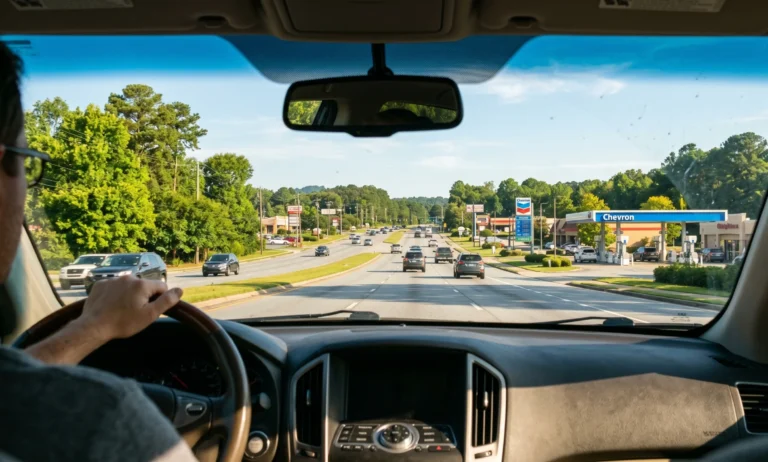
📍 Emission First LLC 3833 Buford Dr, Buford, GA 30519 Next to Chevron · Behind Cash Bucks Title Pawn · Beside Asia Grill Buffet
📞 +1 (470) 273-9500 · 💬 wa.link/udbyhf
Cash $14.99 · Card $15.99 · No Appointment · Walk Ins Welcome Mon–Sat